
BENVINGUTS!

Benvinguts al nostre blog de Ciències del Món Contemporani (CMC). Publicarem en aquest blog tot el que farem durant aquest any: comentaris, conclusions i més.


Esperem que us agradi!


Imagen relacionada

Mostrando entradas con la etiqueta Notícia 01. Mostrar todas las entradas

domingo, 21 de octubre de 2018

1st text commentary: MALE BREAST CANCER


Header 

Male breast cancer

Summary

This news speaks of the, rarely treated, male breast cancer. Indeed, although to a lesser extent than in women, men also suffer from this serious type of cancer. That is why an organization called "Fundación INVI" has been created that investigates about male breast cancer. It is an organization created by Màrius Soler, a man affected by this disease, and decided to start a personal struggle to investigate this sickness.

Link or Reference

Publication date

19/10/18

Scientific scope 

Biological

Glosari

The subject of this news did not contain a very specific vocabulary that I did not understand.

Text commentary 

Breast cancer is one of the most common cancers that exist in the world. That is why I have decided to choose this news referring to a specific aspect related to this disease.

Male breast cancer is not something we usually talk about when we talk about breast cancer. This is probably because it affects only one out of every hundred people affected. Clearly it is a very small percentage, but in any case it is clear that it must be investigated in order to find a solution to this problem. To this end, the INVI foundation that investigates male breast cancer serves the peculiarities that arise when men are affected. It must be taken into account that the health system has focused on the attention and specific problems that affect women with cancer, while there have been specific treatments for sick men.

sábado, 20 de octubre de 2018

1st TEXT COMMENTARY: Wolves


HEADLINE 
We Reintroduced Wolves To Yellowstone 20 Years Ago And It Profoundly Changed The Ecosystem

SUMMARY
A group of people has done a real-world experiment related to wolf population which started 20 years ago.

The experiment started in 1995/1996. Researchers reintroduced around 30 wolves back to Yellowstone and left them there to grow with barely none human interaction. As a result, the wolf population in the park grew and got stable. At the same time the elk population grew smaller, as their predators had increased. This led to a change of behaviour of the elks during the day, as they moved more carefully than before to not be haunted. On the other hand, bison, which are more difficult to prey, replaced the elks on the largest herbivore species. Thanks to the increase and decrease of herbivore species, the park suffered a recovery of willow, cottonwood and aspen trees.

The researches took as conclusion that this could not have happened if there were human interaction, as the wolf recovery wouldn’t have been the same because the agriculture, livestock and hunting would have influenced the way carnivores live. They have prove of these, as it has already happened across Alberta, and the effects indeed vary depending on the human alteration of the system.

LINK OR REFERENCE

PUBLICATION DATE
18 OCT 2018

SCIENTIFIC SCOPE
Biology

TEXT COMMENTARY
This text shows how people interaction with the environment tends to make things work in a different way than they should, usually worse. Without human interaction a whole ecosystem could change and balance by itself, while it is known that in other areas where there’s human interaction, the ecosystem doesn’t balance, and it ends up with the extinction of some species.
This shows us how nature is so perfect and balanced. It doesn’t need to be altered. We can take as conclusion that if we try to live in the environment we are meant to live, and not in an artificial one we’ve created, other species won’t suffer or extinct. It would be ideal, but we, humans, have lost the ability to adapt and survive in most of the cases, so instead to live in the environment without changing our surroundings, we can do it in a way that is not harmful to other species. And in the case some species are in danger because of us, do something to change it.
 
GLOSSARY
None needed

viernes, 19 de octubre de 2018

Report 01: a great failure on apple devices will allow strangers to acces to you're photos


- Header:
The serious failure of iPhone security: just simply skip the PIN to spy your photos.


- Summary:

Thanks to the combination of siri and VoiceOver, there's the possibility to skip face ID, fingerprint sacnner and PIN to acces to you're gallery.


- Link or reference:
https://www.abc.es/tecnologia/moviles/telefonia/abci-grave-fallo-seguridad-iphone-basta-saltarse-para-espiar-fotos-201810171904_noticia.html


- Date 18/10/2018

- Scientific scope:
technology

- Glossary
face ID: technology that permits you to unlock you're mobile with you're face
fingerprint scanner: technology that permits you to unlock you're mobile with you're finger
VoiceOver: app that makes possible the voice use on some apps on apple products and also android, thought android doesn't have this problem.

It is a simple method which involves many calls with an iphone to another iphone. it works in a way that you follow some patterns using siri and VoiceOver so you can acces to the photos os certain victim.

- Commmentary:
This report is talking about the seccurity problem that apple devices are suffering right now, explaining how does that happen. But at the moment apple hasn't figure it out why is happening. Also this hasn't bein the first time that something like this happened on apple devices, wich makes me think why with the popularity of the brand, why does this sort of things still happen.

Notícia 01: Planta que mata cèl·lules de càncer

- Titular:                                                     Una planta de l'Amazones que mata cèl·lules 
de càncer reviu les esperances
- Resum: 
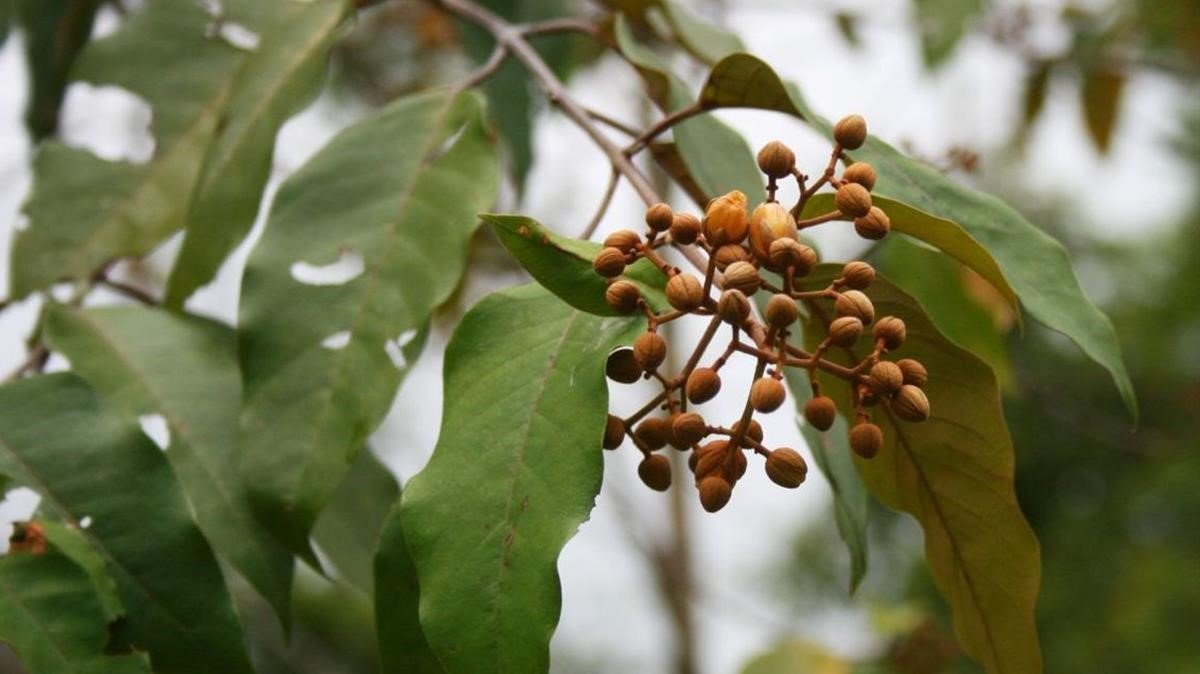
    La científica, Jenifer Trepiana, junt amb els seus companys de la Facultat de Medicina del País Basc, ha publicat el seu estudi sobre com la planta Vismia baccifera, que només es troba en l'Amazones colombià podria tenir un futur com a tractament per al càncer de fetge. 
    Els indígenes fan servir aquesta planta per les seves propietats antiinflamatòries. I després, d'una comparació amb altres plantes de l'Amazones, els científics van determinar aquesta planta com la que provoca més efectes sobre el fetge gràcies a la seva capacitat antitumoral. 
    L'últim pas que queda per comprovar és la seva eficàcia, per això es tractarà primer a fer proves amb ratolins, per així al cap del temps, fer que funcioni en humans. 

- Font (enllaç o referència bibliogràfica): 
- Data de publicació: 30 de setembre de 2018
- Àmbit científic: Medicina i Salut
- Glossari: 
               - Vismia baccifera: planta de l'Amazones colombià, amb capacitat de matar les cèl·lules de càncer del ronyó o del fetge.

Resultado de imagen de vismia baccifera

- Comentari de text: 
    La notícia parla sobre la possibilitat de un tractament anticàncer de fetge, a través d'una planta que només es troba a l'Amazones colombià i que té propietats antiinflamatòries i d'eliminació de cèl·lules de càncer en aquest òrgan i el ronyó. 

    Només falta que provin la planta amb éssers vius amb aquests tipus de càncers, per així treure una conclusió de la investigació, ja que aquesta podria ser un descobriment molt important per el que s'evitarien moltes morts i disminuirien els costos de tractaments de càncer.